
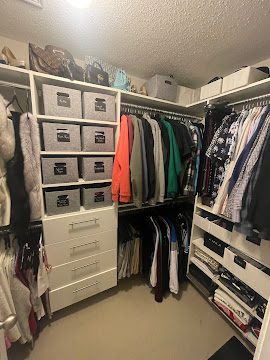
To organize a closet, take everything out, sort each item into keep, donate, relocate and toss piles, then group what is left by category and put it back so the things you wear most are easiest to reach. Use matching hangers, clear bins and labels, store off-season clothes up high, and keep daily items at eye level. Done in one focused session, this gives you a closet that stays tidy instead of one that becomes a pile again within days.
Your closet is one of the first things you see every morning. When it is chaotic, the whole day starts on the back foot. When it works, getting dressed is fast and calm. Here is the exact process we use to organize closets in homes across the Greater Toronto Area.
Step 1: Empty the closet completely
Pull everything out, clothes, shoes, bags, boxes, all of it. It looks worse before it looks better, but you cannot judge what you own or design a good layout while items are crammed in the way. Lay everything on the bed so you can see the full picture.
This is usually the moment people realize how much they own and how little of it they actually wear.
Step 2: Sort with the four-pile method
Go through every item once and sort it into one of four piles:
- Keep - you wear it, it fits, and you love it.
- Donate - good condition, but you no longer wear it. Many GTA charities and shelters accept gently used clothing.
- Relocate - belongs somewhere else (off-season gear, items for another room).
- Toss or recycle - stained, damaged, or beyond repair. Textile recycling drop-offs exist across Toronto and York Region.
A helpful test: if you have not worn it in the last year and it is not seasonal or sentimental in a meaningful way, it is usually safe to let go. Try not to keep things out of guilt. A closet full of clothes you do not wear only makes it harder to find the ones you do.
Step 3: Group like items together
With only your keepers left, sort them into categories before anything goes back:
- Tops (then split by sleeve length if you have a lot)
- Bottoms (pants, jeans, skirts)
- Dresses
- Jackets and outerwear
- Workout and loungewear
- Shoes
- Bags and accessories
Within each group, organizing by colour makes the closet easier to use and genuinely calming to look at. Grouping is what makes the system stick, because every category has an obvious home.
Step 4: Put it back with a smart layout
Now design the layout around how you actually use the space:
- Eye level and front: daily and current-season items you reach for most.
- Higher shelves: off-season clothing, special-occasion pieces, and backstock.
- Lower areas: shoes, baskets and heavier items.
- Hang what wrinkles (blouses, dresses, blazers) and fold what does not (knits, jeans, t-shirts) to save space and protect fabrics.
Keep the things you use every day in the easiest-to-reach zone. Everything you rarely touch can move up or to the edges.
Step 5: Use the right storage tools
The right tools turn a tidy closet into one that stays tidy:
- Matching slim hangers instantly make a closet look calmer and create more space. Velvet ones stop clothes from slipping.
- Clear bins or labelled boxes for accessories, seasonal items and anything off-season.
- Drawer dividers for socks, underwear and small folded items.
- Shelf dividers to keep stacks of folded clothes from toppling.
- Shoe racks or clear shoe boxes to keep footwear visible and off the floor.
- Hooks on the wall or door for bags, hats, robes and tomorrow's outfit.
As always, declutter first and buy storage second, and measure your closet before you shop so everything fits the space you actually have.
Step 6: Maintain it with simple habits
A closet stays organized through small, repeatable habits, not willpower:
- One in, one out. When something new comes in, something old goes to the donate bin.
- Keep a donate bin in the closet. The moment something no longer fits your life, it goes straight in.
- Reset for 2 minutes a day. Re-hang and refold as you go so it never snowballs.
- Switch seasons twice a year. Rotate off-season items up or out, and do a quick purge while you are at it.
The most common closet-organizing mistakes
After organizing many GTA closets, these are the traps we see most:
- Keeping clothes that do not fit "for someday." They take up prime space and quietly make you feel bad. Keep the clothes for the life you live now.
- Buying bins and hangers before decluttering. You end up organizing things you do not need. Sort first.
- Mismatched hangers. They make even a tidy closet look chaotic and waste space.
- No home for accessories. Belts, bags and scarves end up in piles. Give them a dedicated spot.
- Skipping the off-season split. Cramming all four seasons into one rod makes everything harder to see and reach.
A local note for GTA closets
Many Toronto and York Region homes, especially condos and older houses, have small or awkward closets. When space is limited, go vertical and use every surface: a second hanging rod, over-the-door organizers, slim hangers and stackable bins can effectively double a small closet's capacity. The tighter the space, the more a real system pays off.
When to call a professional organizer
If your closet feels too overwhelming to start, or you have organized it before only to watch it slide back into chaos, a professional organizer can help. We bring the system, the right products and a second set of hands, and we make the decisions feel easier, with zero judgment. We also haul away the donations so your space is truly finished. At Chaos Meets Order, we organize closets and bedrooms for families across Toronto, Vaughan, Maple, Markham, Richmond Hill, Aurora and York Region, and we offer ADHD-friendly organizing for anyone who finds traditional systems hard to maintain. See our organizing services or book a free consultation.
Frequently asked questions
How do I organize a closet step by step? Empty it completely, sort every item into keep, donate, relocate and toss piles, group what you keep by category, then put it back so daily items are easiest to reach. Use matching hangers, clear bins and labels, and store off-season clothing up high.
How do I decide what clothes to get rid of? If you have not worn an item in the last year and it is not genuinely seasonal or sentimental, it is usually safe to let go. Keep clothes that fit and suit your life now, not out of guilt or for a "someday" that may not come.
What is the best way to organize a small closet? Go vertical. Add a second hanging rod, use over-the-door organizers, slim matching hangers and stackable bins, and store off-season items up high. Decluttering ruthlessly matters most when space is tight.
Should I hang or fold my clothes? Hang items that wrinkle easily like blouses, dresses and blazers, and fold sturdier items like knits, jeans and t-shirts. This saves space and protects your clothing.
How do I keep my closet organized? Use the one-in-one-out rule, keep a donate bin in the closet, do a quick 2-minute reset each day, and switch your seasonal items twice a year with a small purge each time.
Ready for a closet that finally works? If you would love a hand getting there, book a free consultation with Chaos Meets Order. We will build a closet system that fits your space and your life, judgment-free.
How to organize a closet that stays tidy
Learning how to organize a closet starts with taking everything out and sorting by category. Once you know how to organize a closet, matching hangers, clear bins and labels keep it neat long term.